
 EN

The evolution of rail transportation has driven continuous innovation in track fastening technology. A rail spike has been the traditional standard for securing rails to wooden sleepers for over a century, offering proven reliability and simplicity. However, modern elastic fastening systems have emerged as sophisticated alternatives that address many of the limitations inherent in conventional rail spike designs. Understanding the differences between a rail spike and contemporary elastic fastening solutions is essential for railway operators, maintenance engineers, and infrastructure planners who must make informed decisions about track installation and long-term maintenance strategies.
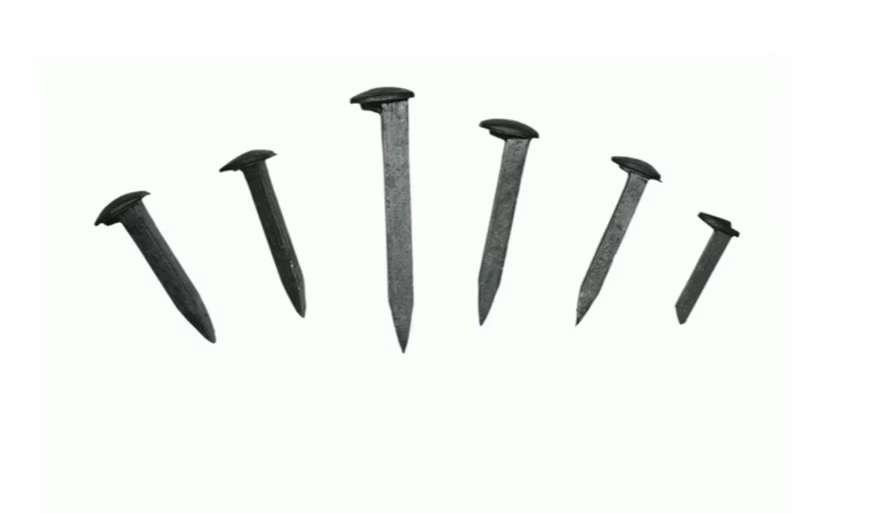
Modern rail infrastructure faces pressures that traditional fastening methods struggle to manage effectively. A rail spike, while cost-effective and straightforward to install, cannot absorb vibration, accommodate rail expansion, or adapt to varying load conditions as modern elastic fastening systems can. Today's rail networks must handle higher speeds, heavier trains, and more frequent usage patterns than ever before, making the comparison between a rail spike and elastic alternatives increasingly relevant for railway authorities worldwide.
Understanding Traditional Rail Spike Technology
How a Rail Spike Functions in Track Assembly
A rail spike has historically served as the primary mechanical connector between rail and sleeper, employing a rigid fastening approach that relies on friction and bearing pressure. When driven into wood, a rail spike creates an immovable connection through direct contact between the spike body and the wooden fiber structure. The simplicity of a rail spike installation process requires only a spike hammer and basic training, making widespread deployment feasible across extensive rail networks. However, this rigidity that makes a rail spike so straightforward to use also creates significant operational challenges in modern railway environments.
The performance limitations of a rail spike become apparent under dynamic loading conditions. A rail spike cannot distribute loads evenly or accommodate the cyclical stresses that high-speed trains generate. Over time, repeated vibrations cause a rail spike to loosen gradually, requiring frequent maintenance interventions to ensure safe operation. Railway maintenance teams must regularly inspect tracks using a rail spike fastening system and drive spikes back to their original depth, representing a continuous and labor-intensive maintenance burden that modern systems aim to reduce.
Material Properties and Installation Characteristics
Traditional rail spike designs typically use hardened steel with specific dimensional standards that have remained relatively unchanged for decades. A rail spike exhibits excellent shear strength under static loading but lacks the elasticity needed to absorb impact and vibration forces. The installation of a rail spike depends entirely on the quality of the wooden sleeper substrate, which means performance can vary significantly based on wood condition, moisture content, and age. Once a rail spike is driven into wood, it creates an essentially permanent connection that cannot adjust to changing track geometry or rail thermal expansion.
The cost advantage of a rail spike has historically made it the default choice for railways with limited capital budgets. Material costs for a rail spike remain substantially lower than modern fastening components, and the installation equipment required is minimal and widely available. Yet this initial cost advantage often disappears when accounting for the long-term maintenance expenses associated with a rail spike loosening and requiring repeated re-tightening throughout its service life.
Modern Elastic Fastening Systems: Core Advantages and Technology
How Elastic Systems Differ From Traditional Rail Spike Approaches
Elastic fastening systems represent a paradigm shift away from the rigid connection model that a rail spike provides. These modern systems incorporate spring elements, rubber components, and engineered load-distribution features that actively manage vibration and accommodate dynamic rail movement. Unlike a rail spike, which maintains a fixed position regardless of external forces, elastic fastening systems continuously adjust and absorb energy from passing trains, protecting both the rail and the supporting infrastructure. This fundamental difference in technology philosophy creates measurable improvements in track stability, reduced maintenance requirements, and extended infrastructure lifespan.
The engineering principles underlying elastic fastening systems address every major weakness of traditional rail spike technology. Where a rail spike creates point loads that concentrate stress at specific locations, elastic systems distribute loads across a wider area through their specialized geometries and material compositions. Where a rail spike offers no damping capability, elastic systems actively reduce vibration transmission to the ballast and subgrade. These advantages combine to make elastic fastening systems particularly valuable for high-speed rail, heavy freight operations, and infrastructure where maintenance accessibility is limited or costly.
Performance Metrics and Long-Term Reliability
Railway operators choosing between a rail spike and modern elastic fastening systems should consider several performance dimensions. Elastic fastening systems typically achieve significantly lower loosening rates compared to rail spike fastening, often reducing maintenance interventions by fifty to seventy percent. The vibration damping characteristics of elastic systems create quieter train operations and reduce noise pollution in residential areas near railways. Additionally, elastic fastening systems accommodate greater thermal rail expansion without creating excessive stress concentrations, protecting both the rail itself and the sleeper substrate from accelerated degradation.
Testing data consistently demonstrates that elastic fastening systems maintain more consistent fastening force over extended service periods compared to a rail spike. The elasticity in these systems allows them to compensate for minor changes in sleeper height and rail position, whereas a rail spike cannot adapt and instead develops gaps that progressively worsen. For railways prioritizing safety and reduced accident risk, the superior performance characteristics of elastic systems justify their higher initial material and installation costs through measurably lower lifecycle expenses and improved operational reliability.
Decision Framework: Selecting Between Rail Spike and Elastic Systems
Operational Context and Infrastructure Requirements
The choice between a rail spike and elastic fastening systems fundamentally depends on operational priorities and rail network characteristics. Heritage railways, short-line operations, and low-traffic branch lines may still find a rail spike adequate and cost-appropriate for their specific needs. However, mainline railways, electrified routes, and corridors handling frequent heavy freight trains almost universally benefit from upgrading to elastic fastening systems. A rail spike remains viable only where train speeds are modest, traffic volumes are limited, and maintenance crews can respond quickly to loosening issues.
Infrastructure planners should evaluate sleeper composition as well, since modern elastic fastening systems perform optimally with engineered concrete sleepers rather than wooden ones. A rail spike, conversely, was specifically designed for wooden sleepers and loses much of its practical advantage when used with modern infrastructure materials. For railways transitioning to concrete sleeper installations or upgrading existing track geometry, elastic fastening systems represent the logical technology choice that aligns with contemporary engineering practices and materials science.
Economic Analysis and Total Cost of Ownership
While a rail spike offers lower upfront material costs, comprehensive economic analysis reveals that elastic fastening systems typically deliver superior value over twenty to thirty-year infrastructure cycles. Maintenance labor costs associated with a rail spike represent the largest ongoing expense, as track inspection and re-tightening requirements consume significant resources. Elastic fastening systems reduce these labor demands substantially, offsetting their higher initial component costs within five to ten years for most high-traffic operations. Additionally, reduced track geometry degradation when using elastic systems rather than a rail spike translates to fewer expensive track realignment projects and extended sleeper service life.
Railway operators implementing rail spike replacement programs often discover that upgrading to elastic fastening systems improves operational safety metrics, reduces derailment risk, and minimizes emergency maintenance interventions. Insurance considerations and liability factors may also favor elastic systems in corridors where accident costs are particularly high. For most modern railway contexts, the decision to transition from a rail spike to elastic fastening systems represents not just a technical upgrade but a sound financial investment in infrastructure sustainability and operational efficiency.
FAQ
Can a rail spike still serve modern high-speed rail operations?
A rail spike is fundamentally unsuitable for high-speed rail applications because it cannot adequately manage vibration, thermal expansion, or dynamic loading at speeds exceeding one hundred fifty kilometers per hour. High-speed operations require elastic fastening systems that actively control rail movement and distribute stress evenly. Using a rail spike in high-speed corridors would create unacceptable safety risks and result in excessive maintenance demands. Modern elastic systems are engineered specifically to handle the precise requirements of high-speed rail infrastructure.
How does maintenance frequency differ between rail spike and elastic fastening systems?
A rail spike typically requires inspection and re-tightening every six to twelve months in active rail corridors, while elastic fastening systems often require maintenance only every eighteen to twenty-four months or longer. The reduced maintenance burden of elastic systems translates directly to lower labor costs and fewer service interruptions. For railways operating trains daily, these maintenance differences accumulate into substantial savings and improved operational continuity. A rail spike's need for frequent attention makes it increasingly impractical for networks prioritizing operational efficiency and cost control.
Are there any circumstances where a rail spike remains the better choice?
A rail spike may remain appropriate for heritage railways, museum operations, low-traffic branch lines, and short-distance routes where trains operate at modest speeds and traffic volumes are minimal. In these specialized contexts, the simplicity and low initial cost of a rail spike may outweigh the operational advantages of elastic systems. However, even heritage operators increasingly adopt elastic fastening systems to reduce maintenance burdens and improve safety standards. Modern rail infrastructure standards consistently favor elastic systems, and a rail spike is rarely specified for new installations or major track rehabilitation projects anywhere in the contemporary railway industry.