
 EN
EN
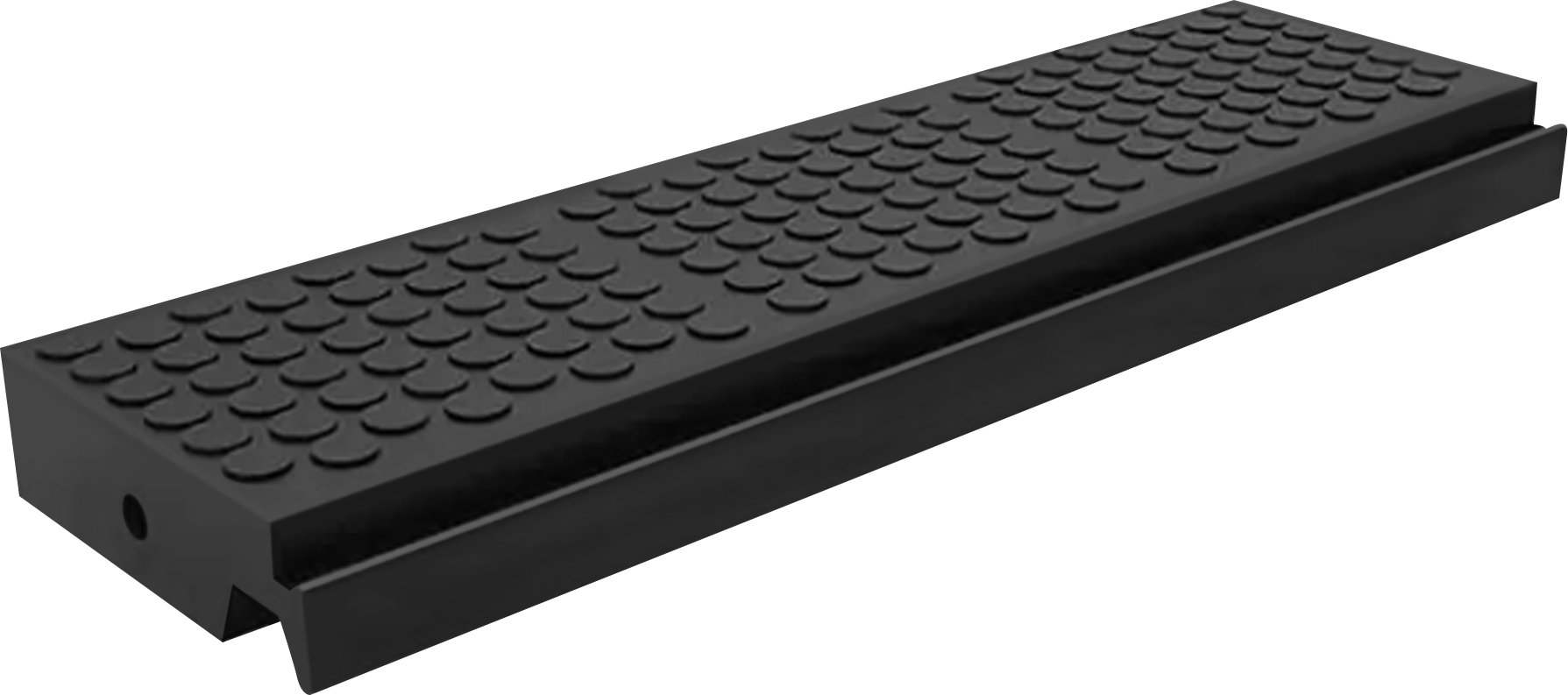
In the world of railway engineering, the smallest components often carry the greatest structural responsibility. Rail plates are a prime example — modest in appearance but critical in function. These components sit at the interface between the rail foot and the sleeper, serving as a load-distributing and alignment-preserving element that directly influences the long-term integrity of the entire track structure. Without properly designed and installed rail plates, the compressive and lateral forces generated by passing trains would concentrate at narrow contact points, accelerating deterioration of both the rail and the underlying sleeper material.
Understanding the specific structural role of rail plates is essential for track engineers, maintenance professionals, and procurement teams who are responsible for specifying components that will perform reliably under heavy operational loads. This article examines how rail plates reduce structural track damage, what mechanisms they activate, and why their design and material selection have a measurable impact on overall track lifespan. Whether you are managing a freight corridor, a passenger rail line, or an industrial spur, the principles governing rail plate performance remain consistently relevant.
The Structural Load Path and Where Rail Plates Intervene
How Forces Travel Through a Track Assembly
Every time a train wheel rolls over a section of track, a complex set of forces is transmitted downward and outward through the rail, through the fastening system, and ultimately into the sleeper and ballast bed. The vertical load from the wheel presses directly through the rail web and foot. Without an intermediate component, this force would bear on the sleeper surface at a very small contact area, creating extremely high localized stress concentrations. Over repeated loading cycles, these stress concentrations cause crushing, cracking, and surface wear that compromise structural stability.
Rail plates intervene directly in this load path. By spreading the base of the rail across a broader surface area on the sleeper, they reduce the peak pressure at any single point. This is the foundational mechanical benefit of rail plates — converting a high-intensity point load into a distributed bearing load that the sleeper material can absorb without damage. The significance of this intervention grows with axle load, train speed, and track curvature, all of which amplify the forces entering the structure.
In practical terms, a well-sized rail plate can reduce the contact pressure on a timber or concrete sleeper by a substantial margin, extending the functional life of the sleeper and reducing the frequency of maintenance interventions. This load distribution effect is not incidental — it is the primary engineering reason why rail plates are specified in virtually every modern track design standard.
Lateral Force Management and Gauge Preservation
Beyond vertical forces, rail plates play a significant role in managing lateral loads. Horizontal forces arise from wheel flange contact on curves, from wind loading on elevated structures, and from the thermal expansion and contraction of continuously welded rail. If the rail is allowed to shift laterally on the sleeper surface, gauge widening or narrowing can occur — both of which are serious safety hazards. Rail plates, particularly those with raised shoulders or integrated cant, provide mechanical resistance to this lateral movement.
The shoulders of a rail plate constrain the rail foot within defined limits, preventing it from migrating sideways under repeated lateral loading. This shoulder restraint is especially valuable on curves, where the centrifugal forces of a moving train push the rail outward with considerable energy. By keeping the rail anchored within the plate geometry, the track maintains its gauge over time without requiring frequent manual correction. This translates directly into reduced structural damage because misaligned track accelerates wear on both the rail and the wheel profile, creating a destructive feedback loop that shortens component life.
Rail Plate Design Features That Prevent Track Deterioration
Cant and Inclination for Rail Seating Optimization
One of the most important design features of rail plates is the inclination or cant built into their upper surface. Standard track design specifies that the rail should be inclined inward at a ratio such as 1:20 or 1:40, positioning the rail head at an angle that aligns more closely with the natural conical profile of train wheels. When the rail foot sits on an inclined rail plate surface, this cant is achieved passively, without requiring any adjustment during installation.
Correct cant reduces rolling contact stress at the wheel-rail interface. When the contact patch between wheel and rail is well-centered, the stress distribution across the rail head is more uniform, reducing the rate of rolling contact fatigue cracking. Rail plates that incorporate the correct cant therefore protect the rail itself from a form of structural damage that is both expensive to monitor and costly to address. The downstream savings from this design feature extend well beyond the rail plate itself.
For timber sleeper applications specifically, the C-shaped wooden sleeper iron base plate represents an engineered solution that combines the cant function with a structural form that grips the sleeper surface and provides additional resistance to longitudinal movement. The C-shaped profile wraps around the edges of the sleeper, adding a mechanical locking dimension that flat plates cannot offer. This geometry is particularly effective in track sections subject to heavy braking or acceleration forces.
Material Selection and Its Effect on Fatigue Life
Rail plates are typically manufactured from cast iron, rolled steel, or forged steel, with each material offering a different balance of strength, toughness, and corrosion resistance. The material choice directly affects how the plate responds to repeated loading over millions of cycles. Cast iron plates offer high compressive strength and good wear resistance on the lower surface, which contacts the sleeper. Rolled and forged steel plates offer superior toughness and resistance to impact, making them more appropriate for high-speed or heavy-haul applications.
When a rail plate is made from a material that is insufficiently tough, it can develop cracks under the repeated bending and impact loads of train passage. A cracked rail plate loses its load-distributing function and may allow the rail to rock or shift, creating a dynamic instability that accelerates damage to surrounding components. Specifying rail plates with appropriate material toughness for the anticipated load spectrum is therefore a critical design decision, not merely a procurement detail.
Corrosion is another material-related threat. Rail plates in outdoor environments are continuously exposed to moisture, ballast fines, and chemical contamination from diesel spills and ballast treatment agents. Corrosion-induced section loss weakens the plate over time, while corrosion products between the plate and the sleeper can create voids that alter the bearing contact geometry. Specifying plates with appropriate protective coatings or corrosion-resistant steel grades reduces this deterioration pathway significantly.
How Rail Plates Protect the Sleeper-Ballast Interface
Prevention of Sleeper Surface Abrasion
The interface between the rail plate and the sleeper surface is a critical zone where structural damage can originate quietly and accumulate over years. When a rail plate is absent or incorrectly sized, the steel rail foot bears directly on the timber or concrete sleeper. Under repeated loading, the hard steel foot grinds against the softer sleeper material, creating a phenomenon known as rail seat deterioration. In timber sleepers, this manifests as crushing and fiber separation. In concrete sleepers, it appears as cracking and spalling of the rail seat area.
Rail plates protect against rail seat deterioration by interposing a steel-to-steel or steel-to-concrete interface that is far more durable than a direct rail-to-sleeper contact. The plate distributes the load and reduces the relative motion between the rail foot and the sleeper surface. This protection is most important on soft timber sleepers, where the compressive strength of the wood is limited and the consequences of localized crushing can develop quickly under high axle loads.
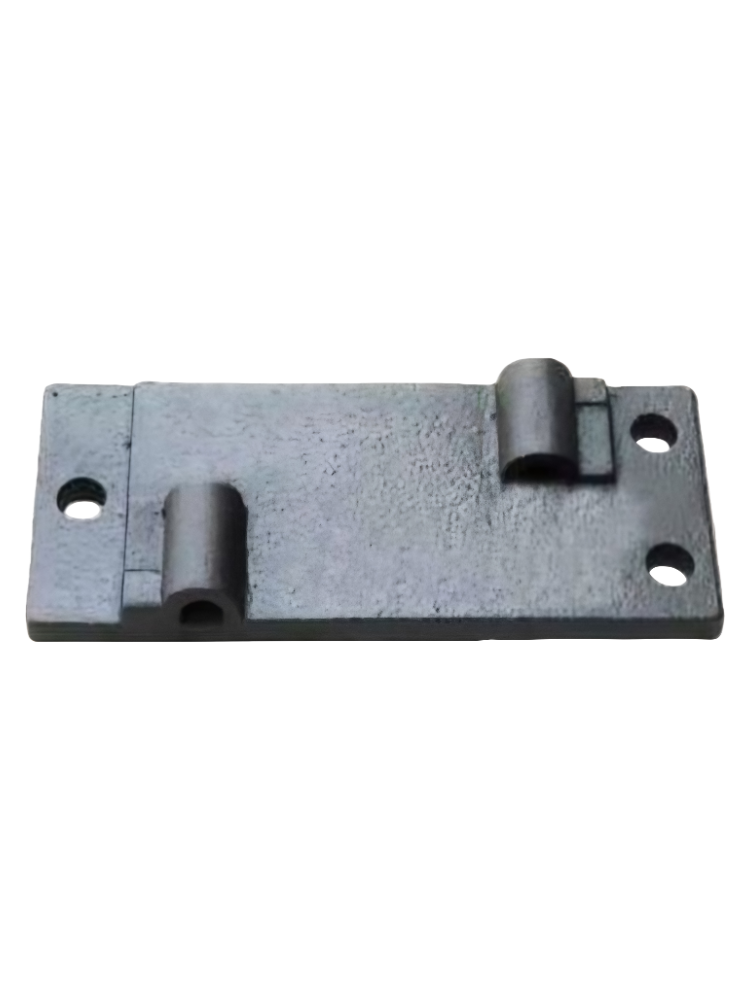
By preserving the geometry of the rail seat, rail plates ensure that the rail remains at the correct height and cant over time. A damaged rail seat causes the rail to sink unevenly, creating a differential settlement condition that introduces dynamic forces into the track structure on every wheel passage. These dynamic forces are magnified at speed and can cause damage far beyond the immediate rail seat area, affecting the adjacent fastening system, the sleeper as a whole, and even the ballast profile beneath it.
Resistance to Longitudinal Track Movement
Longitudinal rail movement — sometimes called rail creep — is a persistent maintenance challenge on busy lines, particularly those with significant grades, heavy braking zones, or extreme thermal variation. Rail plates contribute to resisting this movement through their interaction with the fastening system. The plate provides a stable base against which rail clips or spikes can exert clamping force. When the plate itself is securely anchored to the sleeper, the entire fastening assembly resists the longitudinal forces that would otherwise cause the rail to creep incrementally in the direction of traffic or thermal contraction.
On timber sleeper track, the traditional method of securing rail plates involves coach screws or rail spikes driven through holes in the plate and into the sleeper. The plate geometry, particularly in profiles such as the rail plates designed with C-shaped cross-sections, provides an additional mechanical grip that distributes the pull-out load over a larger wood fiber area, reducing the risk of spike hole elongation and loosening over time.
When longitudinal movement is not controlled, rail joints open and close unevenly, the alignment between adjacent rail sections deteriorates, and ballast is disturbed by the dragging rail foot. Each of these consequences represents a form of structural damage that requires intervention. Rail plates that are correctly designed and installed are a first line of defense against the onset of this chain of deterioration.
Maintenance Implications and Long-Term Track Performance
Inspection Intervals and Early Damage Detection
A key operational benefit of properly functioning rail plates is that they make track inspection more predictable and maintenance cycles more manageable. When rail plates are performing their intended structural functions — distributing load, maintaining cant, preventing lateral and longitudinal movement — the track geometry remains stable for longer periods between tamping and lining operations. This stability reduces the frequency with which geometry defects accumulate to the point of requiring correction, directly lowering maintenance costs.
Conversely, a failed or missing rail plate creates a localized instability that propagates damage to surrounding components faster than typical wear mechanisms would suggest. Track inspectors trained to identify early signs of rail plate failure — such as visible rocking of the rail under load, rust staining around the plate perimeter, or visible cracking in the plate casting — can intervene before secondary damage becomes extensive. The rail plate, in this sense, functions not only as a structural component but also as a diagnostic indicator of underlying track health.
Replacement Strategy and Component Standardization
Rail plates that conform to recognized dimensional standards simplify the replacement process significantly. When plates are interchangeable across sleeper batches, maintenance crews can carry a single plate type for a given rail section and install replacements without requiring specialized tools or custom fitting. This standardization reduces the time a track section must be taken out of service for maintenance, which is particularly valuable on high-density lines where possession windows are limited.
Selecting rail plates from a consistent source also ensures that the geometric tolerances of the bearing surface and fastening hole positions remain uniform. Variations in plate geometry — even minor ones — can affect the distribution of clamping force in the fastening system and alter the effective cant of the rail. Over a long track section with mixed plate batches, these variations accumulate into measurable geometry irregularities. Standardizing on a single proven plate design is therefore both a structural and a maintenance management best practice.
The life expectancy of a properly specified and installed rail plate typically exceeds that of the timber sleeper it sits on, meaning that plates removed during sleeper renewal can often be reused if they are undamaged. This reusability is an economic factor that influences total track component lifecycle cost calculations and should be considered when evaluating initial purchase specifications for rail plates.
FAQ
What is the primary function of rail plates in a track structure?
The primary function of rail plates is to distribute the load from the rail foot across a larger area of the sleeper surface, reducing localized stress concentrations that would otherwise cause crushing or cracking of the sleeper material. They also maintain the correct rail cant, resist lateral and longitudinal rail movement, and protect the rail seat from abrasive wear. Together, these functions help preserve track geometry and reduce the rate of structural damage under repeated train loading.
Do rail plates make a difference on concrete sleeper track as well as timber sleeper track?
Yes. While rail plates are particularly critical on timber sleeper track due to the compressive vulnerability of wood, they also provide important structural benefits on concrete sleeper track. On concrete, rail plates help manage the stress distribution at the rail seat and contribute to maintaining the correct rail inclination. Many concrete sleeper designs incorporate a molded rail seat geometry that performs some of these functions directly, but separate rail plates are still used in applications where the rail section or loading conditions require additional bearing area or cant control.
How do rail plates help reduce long-term maintenance costs?
By preserving track geometry and protecting sleeper rail seats from deterioration, rail plates extend the intervals between geometry correction operations such as tamping and lining. They reduce the rate at which rail seat deterioration develops, which would otherwise require sleeper replacement ahead of schedule. They also help maintain the correct clamping conditions for the fastening system, reducing spike and clip fatigue. All of these effects combine to lower the frequency and cost of maintenance interventions over the life of the track.
What design features should be prioritized when selecting rail plates for heavy-haul applications?
For heavy-haul applications, the most important design features in rail plates include a large bearing footprint to handle high axle loads without exceeding the sleeper's compressive capacity, robust shoulder geometry to resist increased lateral forces, high-toughness steel material to withstand impact without cracking, and corrosion-resistant surface treatment for extended service life in demanding environments. The fastening hole configuration should also be designed to distribute spike or screw pull-out loads over a large wood fiber area, reducing the risk of hole elongation under the sustained dynamic loading typical of heavy freight operations.
Table of Contents
- The Structural Load Path and Where Rail Plates Intervene
- Rail Plate Design Features That Prevent Track Deterioration
- How Rail Plates Protect the Sleeper-Ballast Interface
- Maintenance Implications and Long-Term Track Performance
-
FAQ
- What is the primary function of rail plates in a track structure?
- Do rail plates make a difference on concrete sleeper track as well as timber sleeper track?
- How do rail plates help reduce long-term maintenance costs?
- What design features should be prioritized when selecting rail plates for heavy-haul applications?