
 EN

Rail infrastructure depends on reliable connections between rail segments, and the choice between bolted and welded rail joints fundamentally affects track performance, maintenance requirements, and longevity. Understanding these two primary joining methods is essential for railroad engineers, maintenance teams, and infrastructure planners who must evaluate which approach best suits their operational and budgetary needs. Rail fishplates have long served as critical components in bolted rail joint systems, providing structural support and alignment while allowing for controlled expansion and contraction of the rail.
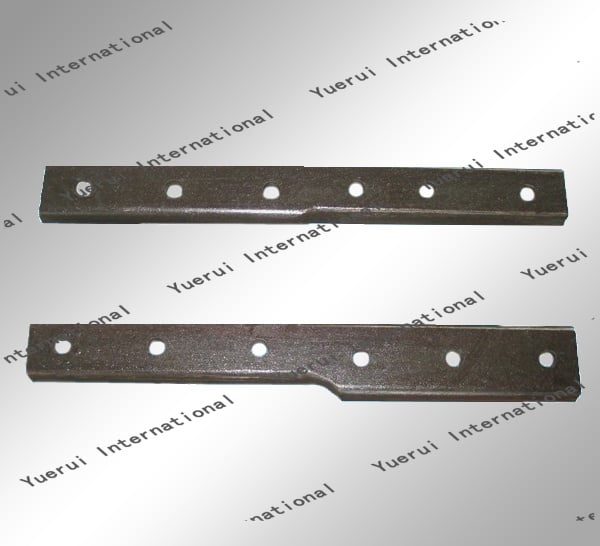
Each joining method carries distinct advantages and challenges that influence track economics and operational safety. Bolted systems using rail fishplates offer modularity and easier repair access, while welded connections provide greater rigidity and smoother transitions for train movement. The decision between these technologies depends on specific track conditions, expected train speeds, climate considerations, and maintenance capacity available to the railroad operator.
Understanding Bolted Rail Joints with Rail Fishplates
How Rail Fishplates Function in Bolted Connections
Bolted rail joints utilize metal plates called rail fishplates that overlap both adjoining rail ends, creating a mechanical connection secured by high-strength bolts. Rail fishplates are precisely engineered to distribute loads evenly across the joint area, preventing stress concentration at single points and reducing the risk of joint failure under heavy train loads. These rail fishplates come in standardized dimensions matched to specific rail profiles, ensuring compatibility and consistent performance across the track network.
The design of rail fishplates allows vertical and horizontal movement between rail segments, accommodating thermal expansion during temperature fluctuations. This flexibility prevents buckling in hot weather and gap formation in cold conditions, two critical concerns in railroad operation. High-tensile bolts tightened to precise specifications hold the rail fishplates firmly in place while maintaining the connection's integrity under dynamic train loads, vibration, and repeated stress cycles.
Maintenance and Operational Advantages of Bolted Systems
Bolted rail joints featuring rail fishplates offer significant maintenance advantages because damaged bolts or plates can be replaced individually without dismantling the entire joint or disrupting track geometry. Track maintenance crews can inspect these joints visually, identifying loose bolts or plate wear quickly, and performing corrective work with minimal equipment and training compared to welded joint repair. The modular nature of rail fishplates makes emergency repairs faster and less costly, reducing track downtime and enabling quicker restoration of rail traffic after damage or routine maintenance cycles.
Furthermore, bolted joints allow for controlled rail adjustments when track realignment is necessary, and the installation process requires less specialized equipment than welding operations. Rail fishplates can be retrofitted onto existing tracks, making bolted systems attractive for upgrading older railroad infrastructure or extending track life without complete replacement. The overall lifecycle cost of bolted systems often favors operators who prioritize maintenance accessibility and operational flexibility.
Characteristics of Welded Rail Joints
Structural and Performance Benefits of Welding
Welded rail joints create a continuous steel connection without the mechanical fasteners required by rail fishplates, producing a seamless joint that provides superior rigidity and load distribution. This permanent fusion eliminates the relative movement that occurs at bolted joints, creating a smoother track profile that reduces wheel impact stress and improves ride quality for trains operating at higher speeds. High-speed rail networks and modern freight railways often favor welded construction because the unified connection minimizes vertical and lateral deflection under dynamic loading conditions.
The absence of bolts in welded rail joints eliminates several failure modes associated with mechanical fasteners, including bolt loosening, corrosion-induced fastener degradation, and stress concentration at bolt holes. Welded connections also reduce noise transmission along the track and decrease the likelihood of sudden joint separation during extreme weather or seismic events. For applications demanding absolute connection reliability and minimal maintenance intervention, welded rail joints represent a superior technical choice despite their higher initial installation complexity.
Installation Complexity and Long-Term Implications
Welded rail joints require specialized equipment, trained personnel, and controlled environmental conditions to execute properly, making installation more expensive and time-consuming than bolted joint assembly. The welding process generates heat-affected zones in the surrounding steel, potentially affecting material properties and requiring careful post-weld inspection to ensure structural integrity and compliance with railroad standards. Once installed, welded joints cannot be easily disassembled for component replacement or track realignment, making repairs more complex and costly when damage does occur.
Repair of damaged welded rail joints typically requires cutting out the damaged section and installing a new welded segment, a procedure involving extended track closures and specialized equipment deployment. This repair methodology increases costs compared to simple bolt replacement in rail fishplates systems. However, the extended service life of welded joints and reduced maintenance frequency between major overhauls often offset higher repair costs over the track's operational lifetime, particularly on high-volume rail corridors where track availability directly impacts revenue.
Comparative Analysis and Selection Criteria
Cost-Benefit Analysis for Different Rail Applications
The initial capital expenditure for bolted joints using rail fishplates typically runs lower than welded installation costs, making this method attractive for budget-constrained projects, secondary rail lines, and temporary track extensions. However, lifecycle analysis must account for ongoing bolt maintenance, periodic rail fishplates inspection, fastener replacement, and labor costs associated with frequent monitoring and adjustment of mechanical connections. Regional climate variations also influence the decision, as freeze-thaw cycles and extreme temperature swings accelerate wear on rail fishplates and fasteners, increasing maintenance frequency in harsh climates.
Welded rail joints demand higher upfront investment but deliver lower maintenance costs over extended operational periods, making this approach economically favorable for primary trunk lines carrying heavy train traffic and operating under stable temperature conditions. The reduced inspection frequency and minimal fastener maintenance translate to decreased operating expenses and improved track availability, particularly important for high-speed and freight networks where downtime directly reduces revenue. Operators must evaluate their specific traffic volumes, climate conditions, available maintenance resources, and capital budget constraints to optimize the bolted versus welded decision for individual track segments.
Performance Metrics and Track Geometry Standards
Railroad standards specify maximum allowable deflection and misalignment at rail joints, parameters that influence the choice between bolted and welded systems for particular applications. Welded rail joints consistently maintain tighter tolerances and more stable track geometry, meeting high-speed rail requirements and reducing wheel wear associated with geometric irregularities. Bolted rail joints using properly maintained rail fishplates can meet standard track geometry requirements but demand more frequent inspection and adjustment to maintain compliance, particularly under heavy load conditions or after temperature extremes.
Noise levels, vibration transmission, and derailment risk also vary between bolted and welded configurations, with welded joints generally demonstrating superior performance in these categories. However, advances in rail fishplates design and manufacturing have improved the performance of bolted systems, narrowing the performance gap for applications not requiring absolute maximum speed operation. The practical decision between these joining methods ultimately depends on balancing technical performance requirements against economic constraints, maintenance capacity, and operational priorities specific to each railroad operator's unique circumstances.
FAQ
What role do rail fishplates play in bolted rail joint systems?
Rail fishplates are metal plates that overlap both rail ends in bolted connections, distributing loads evenly and securing the joint with high-strength bolts. These components accommodate thermal expansion and contraction while maintaining structural integrity, making rail fishplates essential for reliable bolted rail joint performance across temperature variations and dynamic train loads.
Which joining method requires less maintenance over time?
Welded rail joints generally require less maintenance because they eliminate fastener degradation and bolt loosening issues inherent to bolted systems with rail fishplates. However, bolted systems offer easier routine maintenance tasks, while welded repairs are more complex and expensive when damage does occur, making lifecycle cost comparison dependent on specific operational conditions.
Can bolted rail joints with rail fishplates support high-speed rail operations?
Properly maintained bolted rail joints with quality rail fishplates can support moderate-speed operations, but welded joints generally provide superior performance for high-speed rail due to their seamless connections and superior ride quality. Rail fishplates systems work well for freight lines and secondary routes where lower speeds and higher maintenance tolerance are acceptable trade-offs for easier repair and lower initial costs.