
 EN
EN
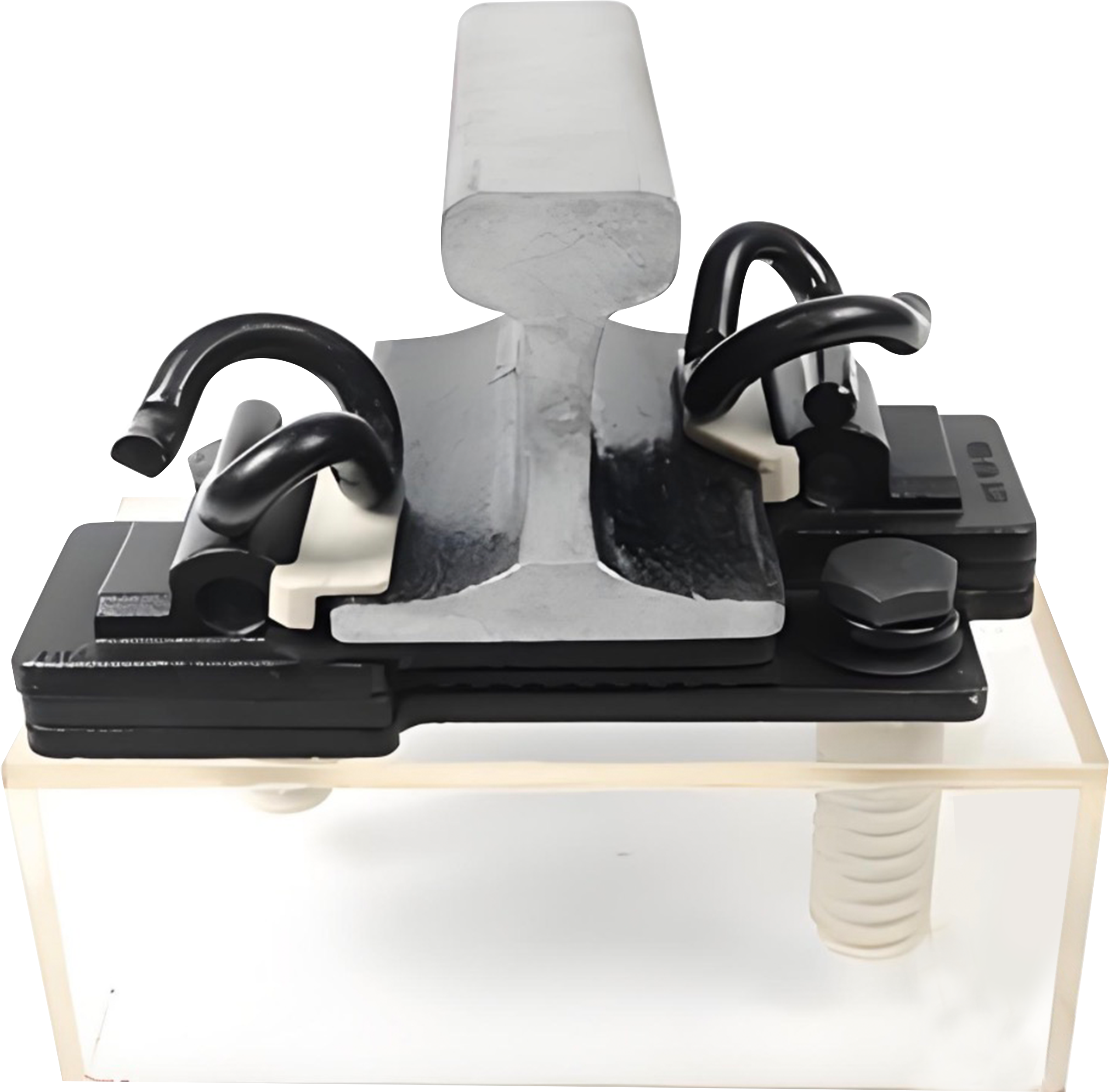
Modern railway infrastructure demands materials that balance performance, cost-effectiveness, and environmental sustainability. The choice between composite and rubber rail pads has become increasingly important for rail operators worldwide. A rail pad serves as a critical component between the rail and sleeper, providing elasticity, vibration damping, and structural protection. Understanding the differences between composite rail pads and traditional rubber options helps railway managers make informed decisions that impact long-term operational efficiency and maintenance budgets.
The railway industry has traditionally relied on rubber rail pads for decades, but composite rail pad technology has emerged as a compelling alternative. This shift reflects advances in material science and changing demands for sustainability and longevity. Choosing the right rail pad type requires examining performance metrics, environmental factors, installation considerations, and lifecycle costs specific to your railway network's operational requirements.
Material Properties and Performance Characteristics
Composition and Structural Behavior
Composite rail pads are engineered from advanced polymers and reinforcing materials, offering superior dimensional stability compared to traditional rubber solutions. A rail pad made from composite materials maintains consistent elasticity across varying temperature ranges and does not degrade as rapidly under ultraviolet exposure. Rubber rail pads, by contrast, experience natural oxidation and hardening over time, particularly in regions with extreme weather conditions. The composite rail pad advantage extends to vertical stiffness maintenance, which remains relatively constant throughout the product's service life, whereas rubber rail pads gradually lose resilience.
The rail pad modulus—a measure of stiffness—directly influences track geometry and rail stability. Composite rail pads typically exhibit controlled creep behavior, meaning they maintain their geometric properties under sustained loads over extended periods. This consistency reduces the frequency of track realignment and geometry corrections. Rubber rail pads tend to exhibit higher creep rates, particularly in high-tonnage railway corridors, requiring more frequent maintenance interventions to maintain optimal track conditions.
Vibration Damping and Acoustic Performance
Vibration management is crucial for track longevity and passenger comfort. A rail pad's ability to absorb and dissipate vibrational energy directly affects ballast settlement rates and rail wear patterns. Composite rail pads excel in controlled frequency response, effectively attenuating vibrations in specific frequency bands while maintaining structural integrity. The rail pad damping coefficient in composite materials remains stable, providing predictable noise reduction performance throughout the infrastructure lifecycle.
Rubber rail pads historically provided adequate damping for conventional rail speeds, but modern high-speed and heavy-haul operations expose limitations in sustained performance. The rail pad material in rubber compositions can shift its damping characteristics when subjected to cyclical loading patterns, potentially compromising vibration control. Composite rail pads maintain more consistent acoustic properties across varying operational speeds and loading scenarios, resulting in reduced track-generated noise and improved structural durability.
Environmental Impact and Sustainability Considerations
Material Lifespan and Replacement Frequency
Environmental sustainability increasingly influences railway infrastructure decisions. The rail pad lifecycle directly correlates with replacement intervals and waste generation. Composite rail pads typically achieve service lives exceeding 30 years in standard conditions, while rubber rail pads may require replacement every 15 to 20 years depending on traffic intensity and climate exposure. Extended lifespan of composite solutions reduces overall material consumption and waste accumulation at railway maintenance facilities.
The rail pad replacement process involves significant operational disruption and disposal challenges. Rubber rail pads require specialized recycling protocols, and improper disposal contributes to landfill accumulation. Composite rail pads, designed for extended service life, reduce replacement frequency substantially. When replacement eventually occurs, many composite rail pad formulations demonstrate improved recyclability compared to older rubber compounds, supporting circular economy principles in railway material management.
Carbon Footprint and Manufacturing Impact
Manufacturing processes for railway materials carry environmental implications. The rail pad production for composite solutions involves energy-intensive processes but generates fewer replacement cycles over system lifetime. A rail pad manufactured from composite materials may exhibit higher initial carbon embodiment but compensates through extended service life and reduced transportation emissions associated with frequent replacements. Calculating total lifecycle carbon impact requires balancing manufacturing energy against replacement frequency and transportation miles.
Rubber rail pad manufacturing traditionally involves petroleum-based raw materials and chemical processing that raises environmental concerns. Composite rail pad production increasingly incorporates recycled content and bio-based polymers, reducing fossil fuel dependency. The rail pad choice therefore extends beyond immediate performance considerations to encompass long-term environmental stewardship and regulatory compliance with emerging sustainability frameworks in transportation infrastructure.
Installation, Cost, and Operational Considerations
Installation Process and Retrofit Compatibility
Practical implementation factors significantly influence rail pad selection for existing infrastructure. Composite rail pads often feature standardized dimensions compatible with conventional sleeper fastening systems, facilitating straightforward retrofitting without extensive track modifications. The rail pad installation process for composite materials typically requires basic mechanical tools and standard labor practices. Rubber rail pads similarly integrate with existing infrastructure, but their proven compatibility provides railway operators a lower-risk approach for extensive network replacements.
The rail pad thickness and elasticity profile influence sleeper design and ballast interactions. Composite rail pads with optimized stiffness characteristics may require adjustments to ballast depth or sleeper spacing in retrofit scenarios. Standard rubber rail pads, having operated in existing systems for decades, present well-understood installation protocols requiring minimal design reconsideration. However, new construction projects offer opportunities to optimize track geometry specifically for composite rail pad performance characteristics, potentially improving long-term structural efficiency.
Cost Analysis and Financial Justification
Economic evaluation requires comprehensive lifecycle cost assessment rather than simple capital cost comparison. The rail pad purchase price for composite options typically exceeds rubber alternatives by 20 to 40 percent initially. However, the rail pad total cost calculation must incorporate maintenance intervals, replacement frequency, labor expenses, and operational downtime. Over a 50-year infrastructure lifecycle, composite rail pads often demonstrate superior economic performance through reduced maintenance requirements and extended service intervals.
Budget forecasting for railway operations depends on accurately projecting rail pad maintenance costs and replacement schedules. Composite rail pads enable more predictable capital planning due to longer service life and fewer unscheduled interventions. The rail pad choice also influences adjacent maintenance activities—reduced track geometry corrections and ballast settlement directly decrease labor and materials costs associated with routine maintenance. Comprehensive financial analysis demonstrates that composite rail pads frequently deliver favorable returns despite higher initial investment, particularly for high-traffic corridors where maintenance frequency impacts operational revenue.
FAQ
What makes composite rail pads superior to rubber rail pads?
Composite rail pads offer extended service life, superior dimensional stability, consistent damping characteristics, and reduced maintenance requirements compared to rubber options. A rail pad manufactured from composite materials maintains performance consistency across temperature variations and sustained loading cycles. Rubber rail pads experience gradual oxidation, hardening, and creep that compromise structural reliability over time. The rail pad choice depends on specific operational priorities, but composite solutions excel in high-tonnage corridors and climate-extreme regions where performance consistency is paramount.
How long do composite rail pads last versus rubber alternatives?
Composite rail pads typically achieve 30-year service life or longer under normal operational conditions, while rubber rail pads require replacement every 15 to 20 years. The rail pad lifespan depends on traffic intensity, climate exposure, track speeds, and load configurations. Composite rail pads maintain dimensional stability throughout extended service periods, whereas rubber rail pads gradually lose resilience and require replacement to maintain track geometry. The extended rail pad durability of composite solutions reduces replacement frequency and associated operational disruptions.
Are composite rail pads cost-effective for railway networks?
Despite higher initial purchase costs, composite rail pads typically deliver superior lifetime economics through reduced maintenance requirements, extended replacement intervals, and fewer track geometry corrections. The rail pad total cost calculation must include labor, material disposal, operational downtime, and maintenance expenses across the full infrastructure lifecycle. For high-traffic railways, the rail pad investment in composite solutions frequently produces positive financial returns within 10 to 15 years. Each rail pad decision should incorporate network-specific factors including traffic volume, budget constraints, and long-term infrastructure planning objectives.