
 EN
EN
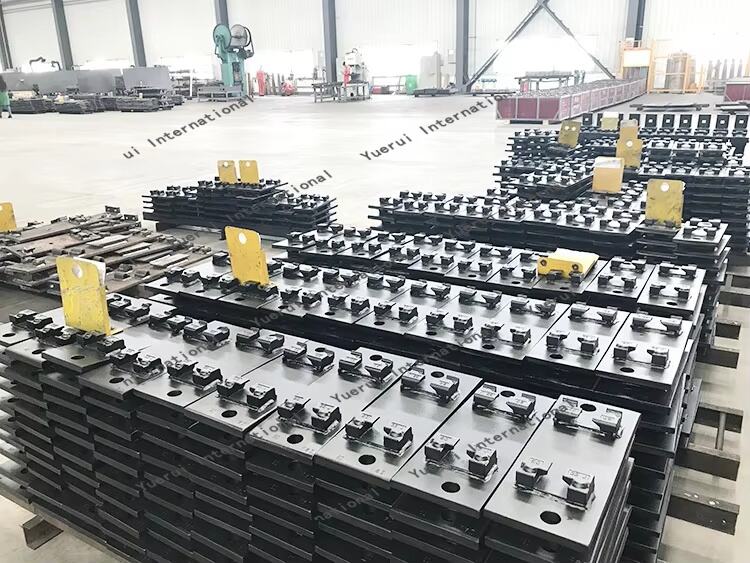
Railway infrastructure demands precision, durability, and efficiency at every level, particularly when it comes to critical components like turnouts. Railway turnout baseplates serve as fundamental elements that ensure proper track alignment, load distribution, and long-term structural integrity. These specialized plates provide the essential foundation between rails and sleepers, creating a stable platform that withstands the immense forces generated by passing trains while maintaining optimal track geometry throughout years of continuous operation.
Modern turnout installations require sophisticated engineering solutions that address multiple technical challenges simultaneously. The complexity of railway switching mechanisms demands components that can handle dynamic loading conditions while maintaining precise dimensional tolerances. Baseplates function as the critical interface that transfers forces from the rail structure to the underlying support system, whether that consists of concrete sleepers, wooden ties, or specialized turnout bearers designed for high-traffic applications.
The evolution of railway turnout technology has led to increasingly sophisticated baseplate designs that incorporate advanced materials science and engineering principles. Contemporary installations utilize baseplates manufactured from high-grade steel alloys that provide superior fatigue resistance and corrosion protection. These components undergo rigorous testing protocols to ensure they meet international railway standards for strength, durability, and dimensional accuracy under extreme operating conditions.
Engineering Principles Behind Baseplate Design
Load Distribution Mechanisms
Effective load distribution represents one of the most critical functions performed by railway turnout baseplates in modern track systems. These components must efficiently transfer vertical loads, lateral forces, and longitudinal stresses from the rail structure to the underlying foundation materials. The geometric design of baseplates incorporates specific features that optimize load spreading across the contact surface, preventing concentrated stress points that could lead to premature failure or track deformation.
The engineering analysis of load distribution involves complex calculations that consider dynamic factors such as wheel loading patterns, train speeds, and axle configurations. Baseplates must accommodate not only static loads but also the dynamic amplification effects that occur when trains traverse turnout installations at operational speeds. Advanced finite element modeling techniques help engineers optimize baseplate geometry to achieve uniform stress distribution while minimizing material usage and manufacturing costs.
Material Selection and Properties
Material selection for railway turnout baseplates involves careful consideration of multiple performance criteria including tensile strength, impact resistance, fatigue life, and environmental durability. High-carbon steel alloys typically provide the optimal combination of mechanical properties required for demanding railway applications. The chemical composition must be precisely controlled to achieve the necessary hardness and toughness characteristics while maintaining weldability for field installation procedures.
Heat treatment processes play a crucial role in developing the final mechanical properties of baseplate materials. Controlled cooling rates and tempering temperatures are optimized to achieve the desired microstructure that provides maximum resistance to wear and fatigue cracking. Surface treatments such as hot-dip galvanizing or specialized coatings provide additional protection against corrosion in harsh environmental conditions.
Installation Procedures and Best Practices
Site Preparation Requirements
Proper site preparation forms the foundation for successful railway turnout baseplate installation and long-term performance. The preparation process begins with accurate surveying to establish precise horizontal and vertical alignment references that will guide the entire installation procedure. Subgrade conditions must be evaluated and prepared to provide adequate bearing capacity and drainage characteristics that prevent settlement or instability issues.
Foundation materials require careful selection and placement to create a uniform bearing surface for baseplate installation. Crushed stone ballast must meet specific gradation requirements to ensure proper load distribution and drainage performance. The ballast layer thickness and compaction procedures follow established railway engineering standards that have been validated through decades of operational experience in various climate and soil conditions.
Alignment and Fastening Systems
Precise alignment of railway turnout baseplates requires sophisticated surveying equipment and specialized installation techniques that ensure dimensional accuracy within tight tolerances. Modern installations utilize laser-guided positioning systems that provide real-time feedback on horizontal and vertical alignment parameters. This technology significantly reduces installation time while improving the consistency and quality of the final track geometry.
Fastening systems for turnout baseplates must accommodate the unique loading conditions and geometric requirements of switching installations. Elastic fastening components provide the necessary clamping force while allowing controlled movement that accommodates thermal expansion and dynamic loading effects. The fastening system design must prevent loosening under repeated loading cycles while facilitating maintenance and adjustment procedures when required.
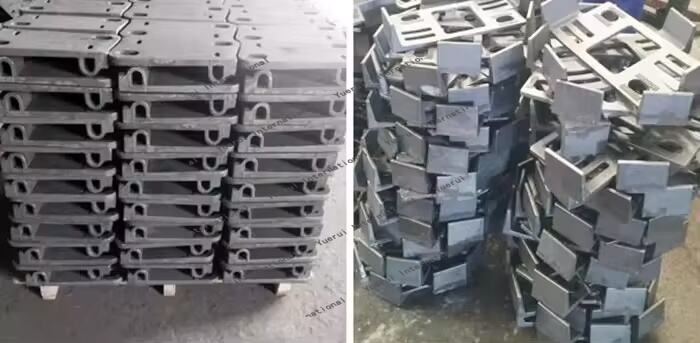
Performance Characteristics and Testing Standards
Fatigue Resistance and Durability
Fatigue resistance represents a critical performance characteristic for railway turnout baseplates subjected to millions of loading cycles throughout their service life. Laboratory testing protocols simulate the complex stress patterns that occur under actual operating conditions, including the effects of varying wheel loads, train speeds, and environmental factors. These tests validate the fatigue life predictions used in design calculations and help establish appropriate maintenance intervals.
The durability of baseplate installations depends on multiple factors including material quality, manufacturing precision, installation procedures, and ongoing maintenance practices. Field monitoring programs track the performance of different baseplate designs under various operating conditions to identify potential improvement opportunities. This data provides valuable feedback for optimizing future designs and refining installation standards.
Quality Control and Inspection Methods
Comprehensive quality control procedures ensure that railway turnout baseplates meet all specified performance requirements before installation. Dimensional inspections verify that manufactured components conform to design tolerances using precision measuring equipment calibrated to national standards. Material testing includes verification of chemical composition, mechanical properties, and surface finish characteristics that affect long-term performance.
Non-destructive testing methods such as magnetic particle inspection and ultrasonic examination detect internal defects that could compromise structural integrity. These inspection procedures follow established railway industry protocols that have been developed through extensive research and operational experience. Documentation of all inspection results provides traceability and quality assurance throughout the manufacturing and installation process.
Maintenance and Lifecycle Management
Inspection Protocols and Procedures
Regular inspection of railway turnout baseplates forms an essential component of comprehensive track maintenance programs designed to ensure safe and reliable operations. Inspection protocols specify the frequency and scope of examinations based on traffic density, operating speeds, and environmental conditions. Visual inspections identify obvious signs of wear, cracking, or displacement that require immediate attention or further investigation.
Advanced inspection techniques utilize specialized equipment to detect subsurface defects and measure dimensional changes that occur during service. Ultrasonic testing can identify internal cracks or material degradation before they become visible on the surface. Precise measurement of baseplate position and geometry helps track long-term settlement or movement trends that may indicate foundation problems or inadequate drainage.
Replacement Criteria and Procedures
Replacement criteria for railway turnout baseplates are established based on engineering analysis of failure modes and safety considerations. Wear limits, crack propagation rates, and dimensional tolerances provide objective standards for making replacement decisions. These criteria help maintenance personnel prioritize work activities and allocate resources effectively while maintaining safe operating conditions.
Replacement procedures must minimize disruption to railway operations while ensuring proper installation of new components. Specialized equipment allows baseplate replacement during scheduled maintenance windows without requiring extensive track closures. The replacement process includes verification that new baseplates meet current specifications and that installation procedures follow established quality standards.
FAQ
What factors determine the appropriate baseplate design for specific turnout applications?
Baseplate design selection depends on multiple technical factors including train speeds, axle loads, traffic density, track geometry, and environmental conditions. Higher speed applications require baseplates with enhanced fatigue resistance and precise dimensional tolerances to maintain smooth wheel-rail interaction. Heavy freight operations necessitate designs optimized for maximum load capacity and impact resistance. Environmental factors such as temperature extremes, moisture exposure, and corrosive conditions influence material selection and protective coating requirements.
How do railway turnout baseplates differ from standard track baseplates?
Railway turnout baseplates feature specialized designs that accommodate the unique geometric and loading requirements of switching installations. They typically have modified shapes and reinforcement patterns to handle the complex stress distributions that occur in turnout areas. The fastening arrangements may differ to accommodate switch rails, stock rails, and crossing components. Manufacturing tolerances are often tighter for turnout applications to ensure proper fit and alignment of critical switching components.
What maintenance practices extend the service life of railway turnout baseplates?
Effective maintenance practices include regular cleaning to remove debris and contaminants, periodic lubrication of fastening components, and prompt repair of minor defects before they propagate. Proper ballast management ensures adequate drainage and prevents water accumulation that can accelerate corrosion. Monitoring of fastener torque values and adjustment as needed maintains proper clamping forces. Timely replacement of worn or damaged components prevents secondary damage to adjacent track structure elements.
How do modern manufacturing techniques improve baseplate quality and performance?
Advanced manufacturing techniques including computer-controlled machining, precision forging, and automated welding processes improve dimensional accuracy and material consistency. Quality control systems with integrated testing equipment ensure that each component meets specification requirements before shipment. Modern heat treatment facilities provide precise control over material properties and uniformity. Statistical process control methods help identify and correct manufacturing variations that could affect product performance or reliability.
Table of Contents
- Engineering Principles Behind Baseplate Design
- Installation Procedures and Best Practices
- Performance Characteristics and Testing Standards
- Maintenance and Lifecycle Management
-
FAQ
- What factors determine the appropriate baseplate design for specific turnout applications?
- How do railway turnout baseplates differ from standard track baseplates?
- What maintenance practices extend the service life of railway turnout baseplates?
- How do modern manufacturing techniques improve baseplate quality and performance?