
 EN
EN
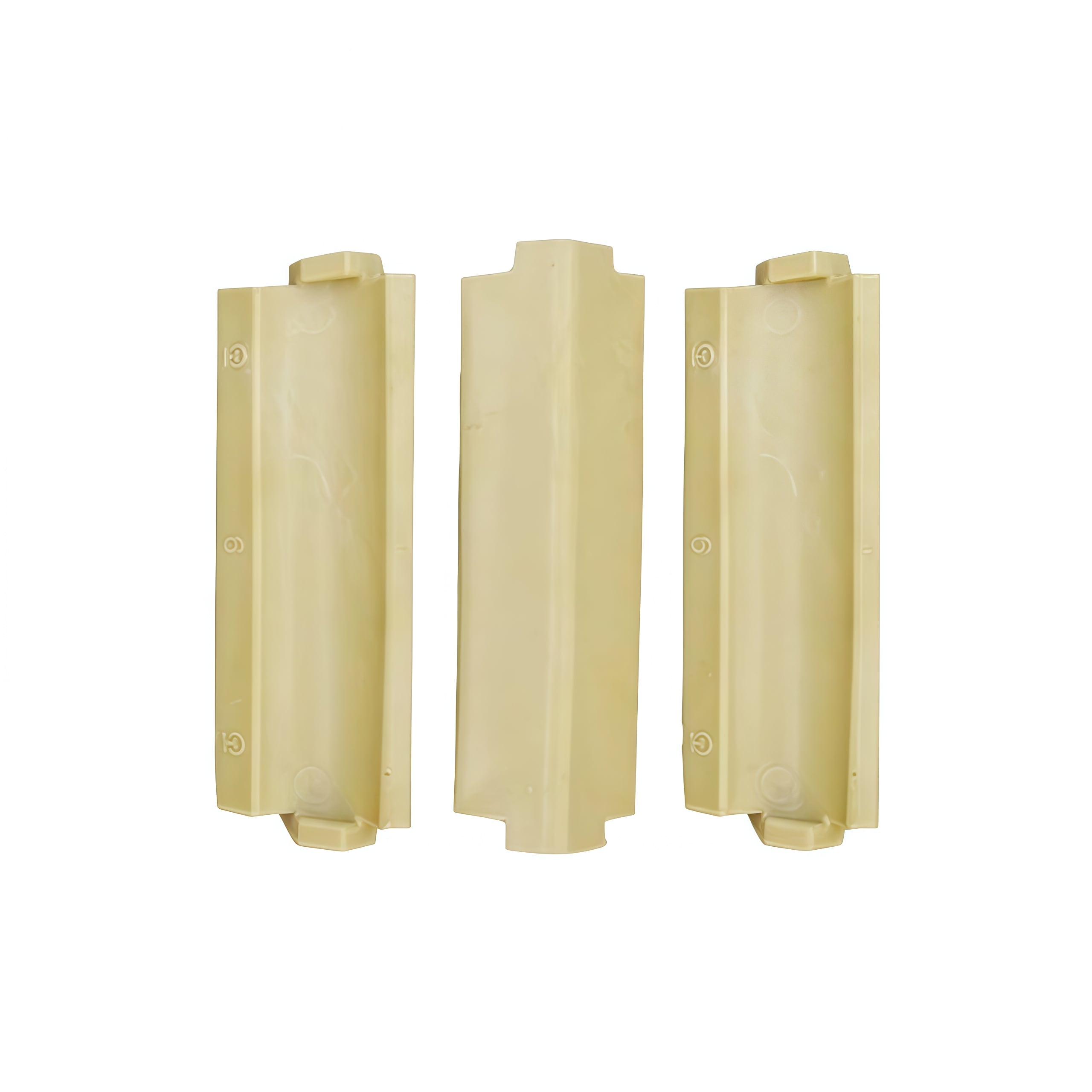
When engineers need reliable fastening performance in mechanical assemblies, nylon sleeves consistently emerge as a practical and effective solution. These compact cylindrical components are designed to sit between fasteners and structural surfaces, creating a controlled interface that directly improves both precision and alignment. Whether used in automotive, electronics, or industrial equipment, nylon sleeves deliver measurable benefits that metal alternatives often cannot match at the same cost or complexity level.
Understanding exactly how nylon sleeves contribute to fastening precision requires looking at their physical properties, installation behavior, and long-term performance under load. Nylon sleeves are not passive fillers. They actively manage the relationship between a bolt, a hole, and the surrounding material. This article explains the specific mechanisms through which nylon sleeves improve alignment, reduce assembly errors, and support more consistent clamping force across a wide range of applications.
The Role of Nylon Sleeves in Precision Fastening
How Nylon Sleeves Control Hole Clearance
One of the primary ways nylon sleeves improve fastening precision is by managing hole clearance. In standard metal fastening, a bolt passing through an oversized hole can shift laterally before the nut is tightened. This lateral movement introduces misalignment that becomes permanent once the joint is fully torqued. Nylon sleeves inserted into the clearance hole fill the gap between the bolt shank and the hole wall, effectively eliminating that freedom of movement. Because nylon sleeves compress slightly under installation pressure, they create a snug fit without requiring machined tolerances as tight as those needed for metal-to-metal fits.
This property makes nylon sleeves especially valuable in assemblies where multiple bolted joints must line up simultaneously. When each fastening point uses nylon sleeves, every bolt is guided to its correct centerline position during tightening. The result is an assembly where all fastening points share the load evenly and the structure holds its designed geometry more accurately than it would without nylon sleeves in place.
Nylon Sleeves and Vibration-Induced Misalignment
Vibration is one of the most common causes of fastening drift in industrial equipment. Over time, repeated micro-movements caused by vibration allow bolts to shift within their holes, gradually pulling an assembly out of alignment. Nylon sleeves address this problem through their natural damping characteristics. The material absorbs and dissipates vibrational energy rather than transmitting it directly through the joint. When nylon sleeves are present, the contact surface between the bolt and the hole wall becomes a controlled, slightly compliant interface rather than a rigid metal-on-metal one.
This compliance is not weakness. Nylon sleeves maintain their dimensional shape under normal operating loads while still absorbing enough vibrational energy to prevent the micro-shifting that causes alignment degradation. In equipment that runs continuously, nylon sleeves can significantly extend the period between realignment maintenance intervals, reducing downtime and operational costs over the life of the machine.
Alignment Benefits Across Assembly Stages
Pre-Tightening Alignment with Nylon Sleeves
Alignment does not only matter after final tightening. During the assembly process itself, nylon sleeves provide a guiding function that helps technicians position components correctly before any torque is applied. When nylon sleeves are pre-installed in clearance holes, they act as locating guides that keep mating parts in the correct relative position while bolts are being inserted and hand-tightened. This reduces the risk of assembly errors caused by components shifting during the initial stages of fastening.
In high-volume manufacturing environments, this guiding function of nylon sleeves translates directly into faster and more repeatable assembly cycles. Workers do not need to hold components in position manually while inserting every bolt because nylon sleeves keep each part located. The time saved across hundreds of assemblies per shift is significant, and the reduction in positional errors lowers rework rates and scrap costs.
Post-Tightening Stability Provided by Nylon Sleeves
After tightening, nylon sleeves continue to support alignment by maintaining consistent contact between the fastener and the hole wall. Unlike metal fasteners without sleeves, where a loose fit allows some rotation or rocking even after torquing, nylon sleeves hold the bolt in position through a combination of friction and gentle compression. This means the assembly retains its aligned geometry more reliably during thermal cycling, mechanical loading, and environmental exposure.
Nylon sleeves also provide electrical insulation at the fastening point, which is a secondary but often important benefit in assemblies that involve mixed-material construction or require isolation between conductive components. This insulating function means that nylon sleeves serve a dual purpose in many electrical and electronic enclosures, improving both mechanical precision and electrical integrity at the same fastening point.
Material Properties That Make Nylon Sleeves Effective
Why Nylon Is the Right Material for Precision Sleeves
Nylon as a material offers a combination of properties that makes nylon sleeves particularly well suited to precision fastening tasks. Nylon has a low coefficient of friction, which means nylon sleeves allow smooth insertion of bolts without binding or galling. At the same time, nylon has sufficient surface hardness to resist deformation under the compressive loads generated during tightening. This balance between lubricity and hardness is what gives nylon sleeves their ability to guide fasteners accurately while still maintaining their structural role after installation.
Nylon sleeves also resist moisture absorption well enough for most industrial environments, and they are chemically resistant to oils, fuels, and mild solvents commonly found in manufacturing settings. This durability means nylon sleeves do not degrade or swell in service conditions that would attack less stable polymer materials. The dimensional stability of nylon sleeves under these conditions ensures that the precision benefits they provide at installation are preserved over the full service life of the assembly.
Load Distribution Through Nylon Sleeves
Beyond alignment and vibration control, nylon sleeves improve fastening precision by distributing the load applied by the fastener head or washer more evenly across the joint surface. Without nylon sleeves, concentrated stress at the edge of a clearance hole can cause local deformation in soft materials, which shifts the effective clamping zone and reduces precision. Nylon sleeves spread this stress more uniformly, protecting the joint material and ensuring that the clamping force acts exactly where it was designed to act.
This load distribution function of nylon sleeves is particularly important when fastening into plastics, composite panels, or thin sheet metals. In these substrate materials, point-loading at the hole edge can cause immediate or fatigue-related failure. Nylon sleeves act as a protective buffer, allowing secure fastening without compromising the integrity of the base material. The result is a more precise, more durable, and more reliable joint across a wide range of assembly conditions where nylon sleeves are correctly specified and installed.
FAQ
What types of assemblies benefit most from nylon sleeves?
Assemblies that involve soft substrate materials, multi-bolt alignment requirements, vibrating machinery, or mixed-material construction benefit most from nylon sleeves. Electronic enclosures, automotive panels, and industrial equipment housings are common applications where nylon sleeves provide both precision and protection benefits.
Can nylon sleeves be reused after disassembly?
Nylon sleeves can often be reused if they show no visible deformation, cracking, or surface damage after removal. However, in precision-critical applications, replacing nylon sleeves during every major disassembly is recommended to ensure that the alignment and clearance control benefits are fully restored when the assembly is rebuilt.
How do nylon sleeves compare to metal sleeves for alignment purposes?
Nylon sleeves offer better vibration damping and electrical insulation compared to metal sleeves, and they are easier to install without risking galling or seizing. Metal sleeves provide higher load capacity and better performance at elevated temperatures, but for most standard industrial fastening applications, nylon sleeves deliver equivalent or superior alignment precision at lower cost and weight.