
 EN
EN
The engineering demands placed on rail fittings differ dramatically depending on whether a railway is designed to move passengers at 300 kilometers per hour or haul thousands of tons of cargo across continental distances. These two railway categories represent opposite ends of the performance spectrum, and the components that hold their tracks in place must be engineered accordingly. Understanding how rail fittings vary between high-speed and heavy freight applications is essential for engineers, procurement specialists, and infrastructure planners who need to make informed decisions about track system design and long-term maintenance strategy.
While both railway types rely on the same fundamental principle of securing rails to sleepers and controlling track geometry, the specific forces, vibration profiles, and fatigue cycles involved are entirely different. High-speed railways prioritize precision, vibration isolation, and geometric stability at extreme velocities. Heavy freight railways prioritize load-bearing capacity, resistance to vertical crushing forces, and durability under repeated high-tonnage axle loads. The rail fittings used in each context reflect these divergent priorities in their material composition, mechanical design, and installation specifications. This article examines those differences in detail, covering fastening systems, elastic components, baseplate design, and maintenance implications across both railway types.
The Fundamental Engineering Context Behind Rail Fitting Selection
How Operating Conditions Define Fitting Requirements
Every decision made in selecting rail fittings begins with a clear understanding of the operating environment. High-speed railways typically operate with lighter axle loads, often in the range of 17 tons per axle, but generate intense dynamic forces due to velocity. At speeds exceeding 250 kilometers per hour, even minor track irregularities are amplified into significant vibration events that can compromise passenger comfort, accelerate component wear, and in extreme cases affect train stability. The rail fittings used in these environments must therefore provide exceptional vibration damping and maintain precise rail cant and gauge over long service intervals.
Heavy freight railways operate under a completely different stress regime. Axle loads commonly reach 25 to 30 tons, and in some heavy-haul corridors they exceed 35 tons. The cumulative tonnage passing over a single track section in a year can reach hundreds of millions of gross tons. Under these conditions, the primary concern is not vibration frequency but sheer mechanical load. Rail fittings must resist vertical compression, lateral spreading forces, and the progressive loosening that results from repeated high-amplitude load cycles. The material toughness and clamping force retention of each fitting component become the dominant design criteria.
The Role of Track Geometry in Fitting Design
Track geometry requirements also diverge significantly between the two railway types. High-speed lines demand extremely tight tolerances on gauge, alignment, and cross-level. Even a few millimeters of deviation can produce measurable changes in ride quality and wheel-rail interaction dynamics at high velocity. This means that rail fittings for high-speed applications must not only clamp the rail securely but must also resist any tendency for the rail to rotate, shift laterally, or creep longitudinally under thermal and dynamic loading.
Freight railways, by contrast, can tolerate somewhat wider geometry tolerances without compromising safety, though they face a different geometric challenge: the tendency of heavily loaded tracks to spread under repeated axle loading. The lateral forces generated by freight wagons, particularly in curves, are substantially higher than those from passenger trains. Rail fittings in freight applications must therefore provide robust lateral restraint, often through wider baseplates, stronger shoulder designs, or higher-tension fastening clips that resist gauge widening over time.
Elastic Clip Design and Clamping Force Variation
Spring Clips in High-Speed Rail Fitting Systems
One of the most visible differences between high-speed and freight rail fittings lies in the design of the elastic spring clip. High-speed fastening systems typically use clips engineered to deliver a precise, moderate clamping force, often in the range of 10 to 14 kilonewtons per clip. This controlled clamping force is intentional. Excessive rigidity in a high-speed track system would transmit vibration energy directly into the sleeper and substructure, increasing noise levels and accelerating concrete fatigue. The elastic clip in a high-speed rail fittings assembly acts as a tuned spring element, absorbing dynamic energy while maintaining consistent rail position.
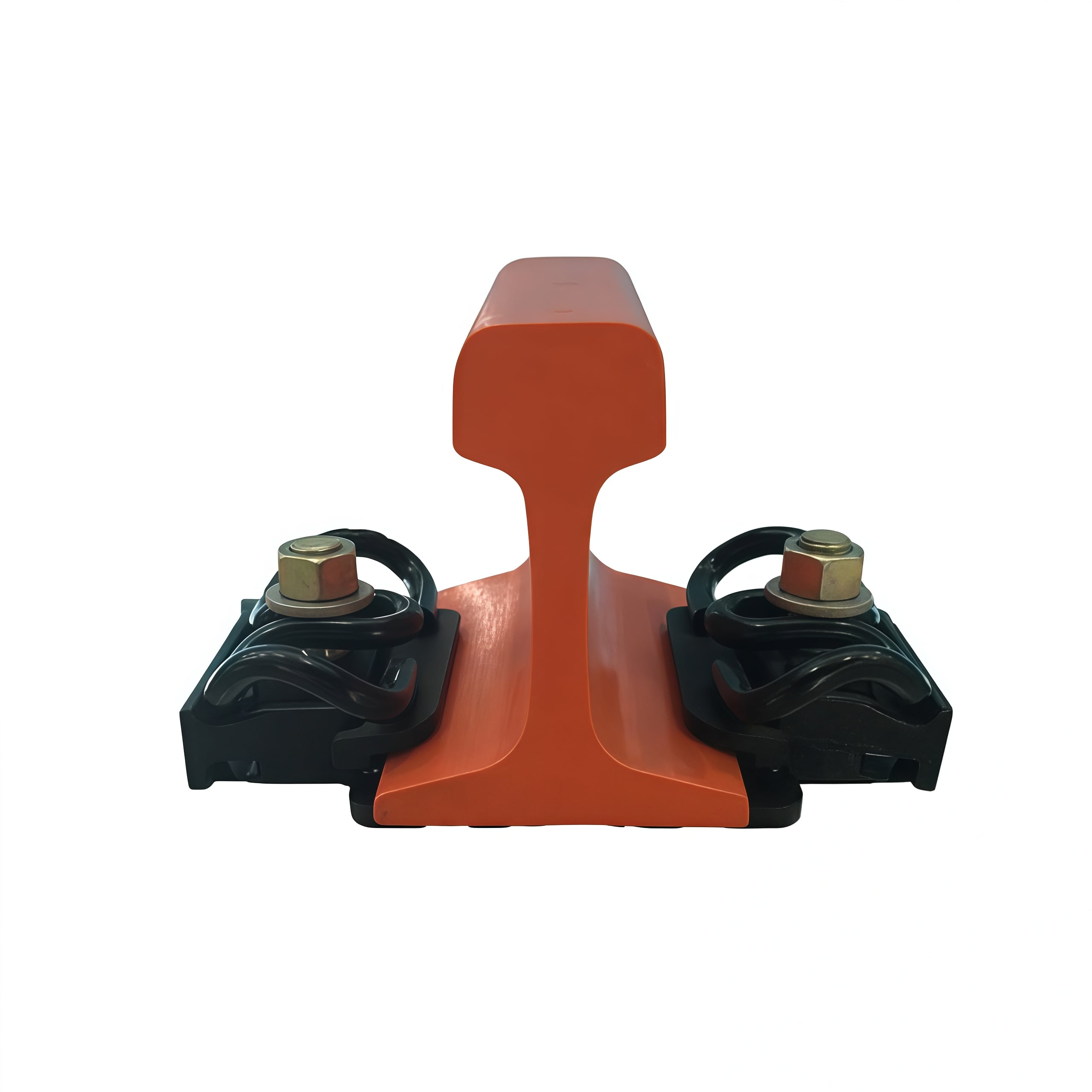
The geometry of these clips is also more complex. Many high-speed fastening clips incorporate a double-coil or multi-loop design that allows the clip to flex through a defined range of motion without exceeding its elastic limit. This ensures that the clip retains its clamping force even after millions of load cycles. The rail fittings used in Type V and similar advanced fastening systems exemplify this approach, combining precise spring geometry with high-quality spring steel to deliver consistent performance across the full service life of the track.
Heavy-Duty Clips for Freight Rail Fitting Applications
In heavy freight applications, the elastic clip must deliver substantially higher clamping forces to resist the greater vertical and lateral loads involved. Clips in freight rail fittings systems are often designed to generate 15 to 20 kilonewtons or more of toe load, ensuring that the rail cannot lift or shift under the impact of heavy axle loads. The material specification for these clips typically calls for higher-strength spring steel with greater cross-sectional area, which increases both the clamping force and the fatigue resistance of the component.
The trade-off in freight rail fittings is that higher clamping forces reduce the vibration-absorbing flexibility of the system. This is generally acceptable in freight contexts because the trains involved are slower and the vibration frequencies generated are lower. However, it does mean that other components in the system, particularly the rail pad, must compensate by providing adequate resilience to protect the sleeper from impact damage. The interaction between clip stiffness and pad resilience is a critical design balance in any freight rail fittings specification.
Rail Pad Specifications and Their Impact on System Performance
Pad Stiffness Requirements in High-Speed Track
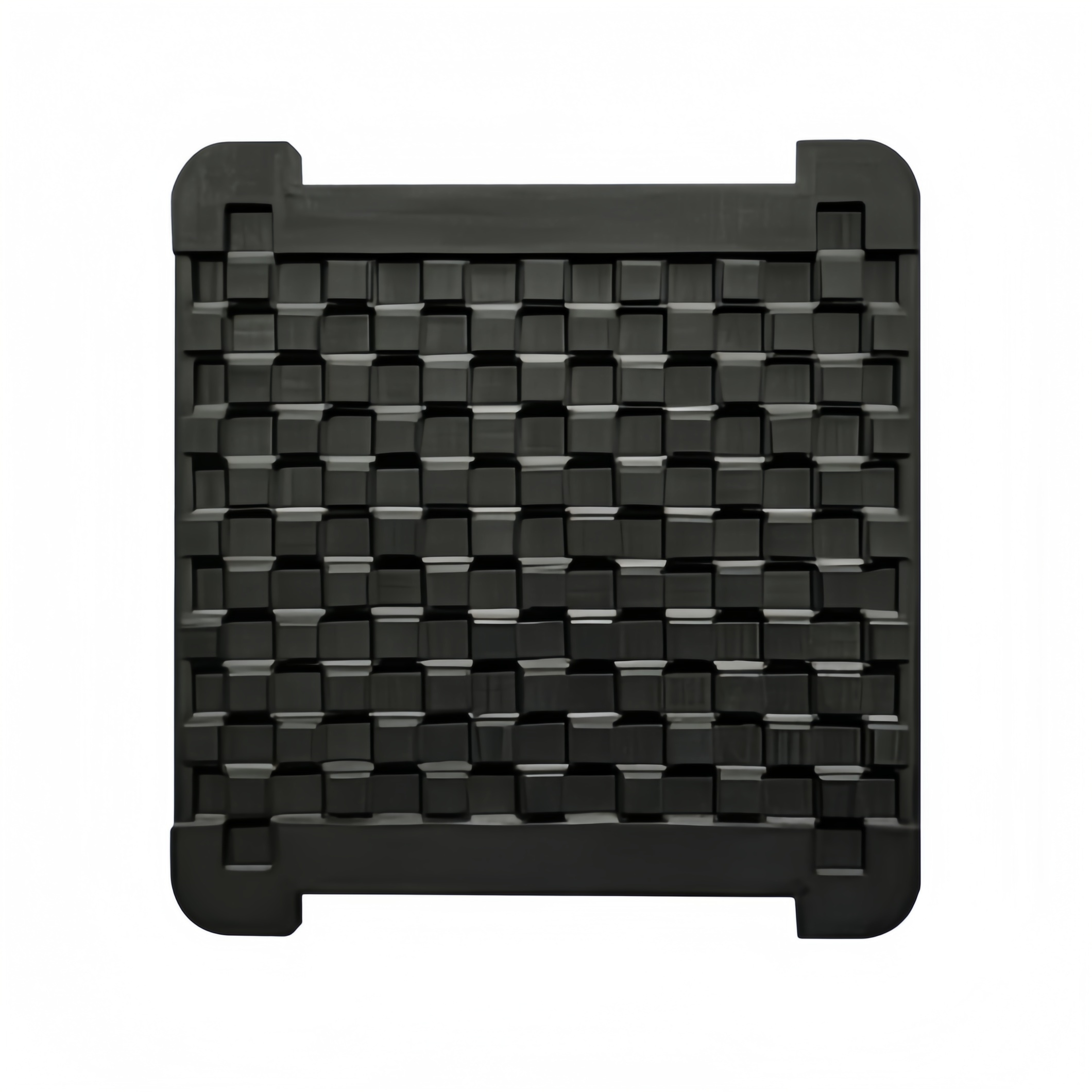
The rail pad sits between the base of the rail and the sleeper or baseplate, and its stiffness characteristics have a profound influence on how the entire rail fittings assembly performs. In high-speed track, rail pads are typically specified with relatively low to medium stiffness values, often in the range of 80 to 150 kilonewtons per millimeter. This softer pad allows the rail to deflect slightly under each passing axle, absorbing dynamic energy and reducing the peak forces transmitted to the sleeper. The result is lower noise, reduced concrete fatigue, and a smoother ride quality for passengers.
The material composition of pads in high-speed rail fittings systems is carefully controlled. Ethylene propylene diene monomer rubber and thermoplastic polyurethane are common choices, selected for their ability to maintain consistent stiffness across a wide temperature range and to resist creep under sustained loading. Pad thickness is also a design variable, with thicker pads generally providing greater resilience but requiring careful coordination with the overall fastening geometry to ensure correct rail cant and clip engagement.
Pad Durability Demands in Freight Rail Fitting Systems
Heavy freight rail fittings impose far more severe demands on rail pads. The combination of high axle loads and high cumulative tonnage means that pads in freight applications experience much greater compressive stress and a higher total number of load cycles over their service life. A pad that performs well under passenger train loading may degrade rapidly when subjected to the repeated high-amplitude compression of freight operations. For this reason, freight rail fittings typically use stiffer, more durable pads with higher compressive strength and better resistance to permanent set.
Stiffer pads in freight applications also help control rail deflection under load, which is important for maintaining track geometry and preventing excessive bending stress in the rail itself. However, stiffer pads transmit more vibration energy to the sleeper, which is why the concrete or timber sleepers used in heavy freight lines are generally designed with greater mass and structural robustness than those used in high-speed applications. The entire rail fittings system, from clip to pad to sleeper, must be designed as an integrated assembly rather than a collection of independent components.
Baseplate and Shoulder Design Differences
Precision Baseplates for High-Speed Rail Fittings
The baseplate in a fastening system serves as the interface between the rail, the elastic components, and the sleeper. In high-speed rail fittings, baseplates are precision-engineered components with tight dimensional tolerances. The rail seat geometry is carefully profiled to maintain the correct rail cant, typically 1 in 40, which ensures optimal wheel-rail contact across the full range of operating speeds. Any deviation from the specified cant angle can alter the contact patch geometry and increase wear rates on both the rail and the wheel.
High-speed baseplates also incorporate precisely positioned clip shoulders that control the lateral position of the elastic clip and, by extension, the clamping force applied to the rail foot. The shoulder geometry must be consistent across thousands of individual components to ensure uniform track behavior along the entire line. Manufacturing tolerances for these components are typically measured in fractions of a millimeter, reflecting the precision demands of high-speed rail fittings applications.
Load-Bearing Baseplates in Freight Rail Fitting Systems
Freight rail fittings baseplates are designed around a different priority: distributing the enormous vertical loads from heavy axles over a sufficient area of the sleeper surface to prevent localized crushing or cracking. This typically results in wider, heavier baseplates with greater bearing area than their high-speed counterparts. The increased footprint reduces the contact pressure on the sleeper surface, extending the service life of both the baseplate and the sleeper.
The shoulder design in freight baseplates must also resist the higher lateral forces generated by heavy wagons, particularly in curves and at switches. Some freight rail fittings systems use cast iron or ductile iron baseplates rather than pressed steel, providing greater rigidity and resistance to deformation under repeated high-load cycles. The choice of baseplate material and geometry is therefore a direct reflection of the operating environment and the specific load profile of the freight corridor in question.
Maintenance Cycles and Long-Term Performance Considerations
Inspection and Replacement Intervals for High-Speed Rail Fittings
High-speed railway operators typically implement rigorous, scheduled maintenance programs for their rail fittings based on track-kilometers traveled and periodic geometric surveys. Because the consequences of a fastening failure at high speed are severe, inspection intervals are short and replacement criteria are conservative. Elastic clips are routinely checked for fatigue cracking, loss of toe load, and corrosion. Rail pads are inspected for compression set, cracking, and contamination. Any component showing signs of degradation is replaced proactively rather than reactively.
The relatively lower axle loads on high-speed lines mean that individual rail fittings components experience less mechanical stress per load cycle, but the high train frequency on busy high-speed corridors means that total cycle counts accumulate rapidly. A high-speed line carrying 200 train movements per day will subject each fastening to far more load cycles per year than a freight line with 50 heavy train movements per day, even though the per-cycle stress is lower. This cycle-count-driven fatigue is a key factor in determining replacement intervals for high-speed rail fittings.
Durability Strategies for Freight Rail Fitting Maintenance
Heavy freight rail fittings maintenance is driven primarily by cumulative tonnage rather than train frequency. Track maintenance teams on freight corridors monitor gross tonnage accumulation and schedule fastening inspections and replacements accordingly. The higher per-cycle stress means that components reach their fatigue limits at lower cycle counts, but the lower train frequency gives maintenance teams more time between train movements to carry out trackside work safely.
One of the most common maintenance challenges in freight rail fittings is the progressive loosening of fastening components due to the vibration and impact energy generated by heavy axle loads. Clips can lose toe load over time, pads can compress permanently, and insulator shoulders can crack or deform. Proactive replacement programs, combined with the use of high-quality components designed specifically for heavy-haul service, are the most effective strategy for managing these degradation mechanisms and maintaining track geometry within acceptable limits.
FAQ
What makes rail fittings for high-speed railways different from standard track fasteners?
High-speed rail fittings are engineered for precision geometry control, vibration isolation, and consistent performance at extreme velocities. They use softer rail pads, carefully calibrated clip clamping forces, and precision baseplates to maintain tight track tolerances and minimize dynamic forces at speeds above 250 kilometers per hour. Standard or freight fasteners prioritize load capacity and durability over vibration management.
Can the same rail fittings be used on both high-speed and heavy freight lines?
In most cases, no. The mechanical requirements of high-speed and heavy freight rail fittings are sufficiently different that using the same components across both applications would result in either inadequate load capacity on freight lines or excessive stiffness and poor vibration performance on high-speed lines. Each application requires a fastening system specifically designed and tested for its operating conditions.
How does axle load affect the specification of rail fittings?
Axle load is one of the primary drivers of rail fittings specification. Higher axle loads require greater clip clamping forces, stiffer and more durable rail pads, wider baseplates with greater bearing area, and stronger shoulder designs to resist lateral spreading. As axle loads increase, every component in the fastening system must be upgraded to handle the greater mechanical stress and fatigue demands involved.
What is the significance of rail pad stiffness in rail fittings selection?
Rail pad stiffness determines how much dynamic energy is absorbed within the rail fittings assembly versus transmitted to the sleeper and substructure. Softer pads absorb more energy, reducing noise and sleeper fatigue, but may allow greater rail deflection under load. Stiffer pads control deflection more effectively but transmit higher forces to the sleeper. The correct stiffness depends on the operating speed, axle load, sleeper type, and overall track design philosophy of the specific railway application.
Table of Contents
- The Fundamental Engineering Context Behind Rail Fitting Selection
- Elastic Clip Design and Clamping Force Variation
- Rail Pad Specifications and Their Impact on System Performance
- Baseplate and Shoulder Design Differences
- Maintenance Cycles and Long-Term Performance Considerations
-
FAQ
- What makes rail fittings for high-speed railways different from standard track fasteners?
- Can the same rail fittings be used on both high-speed and heavy freight lines?
- How does axle load affect the specification of rail fittings?
- What is the significance of rail pad stiffness in rail fittings selection?