
 EN
EN
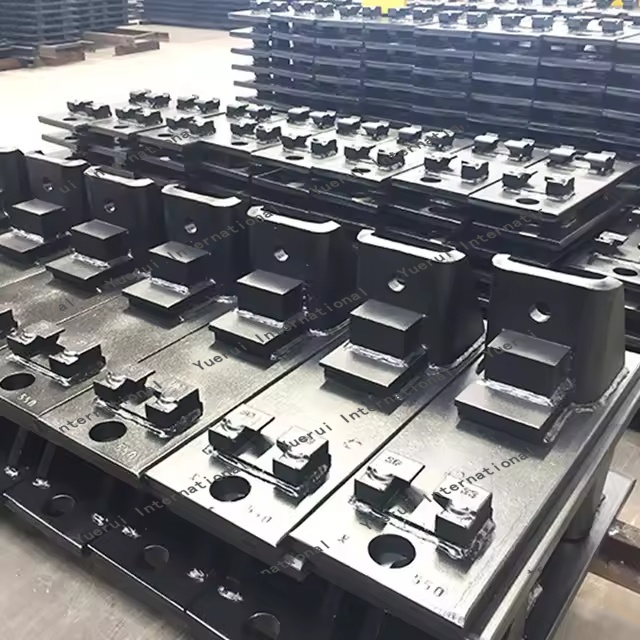
When engineers and infrastructure planners assess the longevity of railways, industrial flooring systems, and heavy-load structures, the conversation often gravitates toward visible components — rails, beams, and fasteners. Yet it is frequently the less visible components that determine whether a structure will stand for decades or begin to degrade prematurely. Base plates are among the most consequential of these foundational elements, quietly performing the critical task of distributing loads, maintaining alignment, and protecting the structural integrity of the systems they support.
Understanding the role of base plates in long-term infrastructure durability requires looking beyond installation day performance. The true value of quality base plates emerges over years of cyclic loading, environmental exposure, and operational stress. In rail infrastructure specifically, base plates sit between the rail and the sleeper, forming the critical interface that governs how forces travel through the track system. The choices made at this interface have compounding effects — either building resilience into the structure or quietly introducing vulnerabilities that manifest as costly failures years down the line.
The Structural Function of Base Plates in Infrastructure Systems
Load Distribution and Stress Mitigation
The primary mechanical role of base plates is to spread concentrated loads across a wider bearing area. When a heavy train passes over a rail, enormous vertical and lateral forces are generated at each point of contact between rail and sleeper. Without base plates, these forces would concentrate at narrow contact zones, creating stress peaks that rapidly degrade both the rail foot and the sleeper surface.
Properly designed base plates distribute these forces evenly, reducing peak stress values to levels that the supporting structure can sustain over tens of thousands of load cycles. This is not a marginal benefit — it is the difference between a sleeper that lasts two decades and one that requires replacement within five years. The geometry and material properties of base plates are therefore engineered specifically to match the load profiles expected in a given application.
In heavy-haul and high-frequency rail corridors, base plates must handle not only vertical loads but also significant lateral forces generated during cornering and braking events. A well-engineered base plate resists these forces through a combination of material strength, geometric design, and secure fastening interfaces, ensuring the rail remains correctly positioned under all operating conditions.
Alignment Preservation Over Time
Long-term infrastructure durability is inseparable from dimensional stability. Track geometry — the precise positioning of rails relative to each other and to the supporting structure — degrades progressively under traffic if components cannot maintain their designed positions. Base plates play a central role in preserving this alignment by providing a stable, geometrically consistent seating for the rail.
The design of base plates often incorporates features such as shoulders, clips, and profiled undersurfaces that resist rail creep and lateral displacement. These features are not merely assembly conveniences — they are long-term geometry controls that reduce the frequency of maintenance interventions required to correct track misalignment. In infrastructure terms, fewer maintenance interventions translate directly into lower lifecycle costs and reduced service disruptions.
Rail alignment issues that originate from inadequate base plate support can escalate progressively. Minor misalignment creates uneven load distribution, which accelerates wear on both the rail and the base plate itself, which further degrades alignment — a compounding cycle that shortens the service life of multiple components simultaneously. High-quality base plates interrupt this cycle at the source.
Material Selection and Its Impact on Service Life
Steel and Iron Compositions in Base Plate Manufacturing
The material from which base plates are manufactured has a direct bearing on their durability under the combined stresses of mechanical loading and environmental exposure. Cast iron and rolled steel remain the dominant materials for railway and industrial base plates, each offering a distinct profile of mechanical properties. Cast iron provides excellent compressive strength and vibration-damping characteristics, while steel offers superior tensile strength and impact resistance.
For applications involving wooden sleepers, the choice of base plate material must also account for the interaction between the metal component and the timber surface. Base plates that are too hard relative to the sleeper material can cause localized crushing of the timber over time, while those that are adequately profiled allow the sleeper surface to provide compliant support without irreversible deformation. This material compatibility consideration is often underappreciated but contributes significantly to overall track longevity.
Surface treatments including galvanization, epoxy coating, and specialized anti-corrosion finishes extend the working life of base plates in aggressive environments. Infrastructure exposed to high moisture, salt spray, or chemical contamination demands base plates with enhanced corrosion resistance, as corrosion-related dimensional loss at the rail-sleeper interface directly undermines the load distribution and alignment functions described earlier.
Geometric Design Features That Enhance Durability
Beyond material selection, the geometric design of base plates determines how effectively they perform their structural functions over time. The profile of the underside determines how the component seats on the sleeper — a flat undersurface distributes load evenly on a flat sleeper, while profiled designs accommodate the curved surfaces common on timber components. Getting this geometry right prevents rocking, tilting, and the progressive loosening that accelerates structural degradation.
The C-shaped profile found in certain base plate designs — such as those used with wooden sleepers in rail applications — exemplifies how geometric innovation contributes to durability. The C-profile increases the bending stiffness of the plate relative to a flat design of equivalent weight, allowing it to span minor irregularities in the sleeper surface without flexing to the point of fatigue. This stiffness benefit accumulates over millions of load cycles into a measurable extension of component service life.
Fastener hole positioning and geometry within base plates also matter. Holes that are correctly positioned and dimensioned ensure that clips and bolts maintain their clamping force reliably. If fastener interfaces are imprecise, pre-load loss occurs over time, allowing micro-movement between the rail and base plate that eventually leads to wear, noise, and structural loosening — all precursors to durability failure.
Base Plates in Rail Infrastructure Specifically
The Interface Between Rail, Base Plate, and Sleeper
In railway engineering, the performance of the track structure depends on how effectively the rail-sleeper interface manages the transfer of dynamic loads into the ballast and subgrade below. Base plates sit precisely at this interface and must perform consistently through temperature extremes, moisture cycles, and the relentless repetition of axle loads. Their role is not passive — they actively shape the mechanical behavior of the track system as a whole.
The base plates used in wooden sleeper track systems must accommodate the dimensional variability of timber while providing a consistent mechanical interface for the rail. Timber sleepers expand and contract with moisture content changes, and they compress slightly under repeated loading. Base plates that can accommodate these minor dimensional changes without losing their clamping integrity contribute substantially to track stability and reduce the frequency of tamping and other maintenance operations.

Track maintenance frequency is one of the most significant cost drivers in rail infrastructure. Base plates that maintain their mechanical function over extended periods directly reduce the number of required maintenance interventions, which translates into lower operational costs, fewer service disruptions, and a longer overall asset life for the track structure. This lifecycle economic argument is a compelling reason why infrastructure owners should prioritize base plate quality in procurement decisions.
Resilience Under Dynamic and Impact Loading
Railway infrastructure experiences not only static loads but also highly dynamic loading events. Wheel-rail interaction generates impact forces that are transmitted through the rail into the base plate and then into the sleeper. In locations such as rail joints, turnouts, and level crossings, these dynamic forces are significantly amplified compared to open track conditions. Base plates in these locations must be dimensioned and manufactured to withstand these elevated demands without fatigue cracking or plastic deformation.
Impact loads that exceed the design capacity of base plates result in progressive deformation that alters the geometry of the rail seating. Once this geometry is compromised, the base plate can no longer distribute loads as designed, and the rate of degradation accelerates rapidly. Selecting base plates with appropriate design margins for the specific traffic and location conditions is therefore a fundamental infrastructure durability decision.
Engineers working on heavy-haul corridors or high-speed lines must treat base plates as dynamic structural components rather than static hardware items. The fatigue life of a base plate under cyclic loading should be a specified parameter, not an assumed given, particularly where axle loads or train frequencies are at the upper end of the design envelope.
Maintenance Considerations and Lifecycle Planning
Inspection Protocols for Base Plate Condition
Effective lifecycle management of infrastructure assets requires systematic inspection of base plates to detect early signs of degradation before they develop into structural failures. Common indicators of base plate deterioration include visible cracking, surface corrosion exceeding acceptable limits, loosening of fasteners, and evidence of rail movement or tipping relative to the plate. These signs can often be detected through routine visual inspections supplemented by periodic geometric surveys.
Modern track inspection technologies, including laser profilometry and inertial measurement units, can detect geometry deviations that originate from base plate degradation before they become severe enough to cause operational problems. Using these data sources to trigger targeted base plate inspections is a cost-effective maintenance strategy that avoids both the cost of premature replacement and the risk of delayed intervention.
Infrastructure managers who integrate base plate condition into their overall asset management frameworks gain a more accurate picture of track health and can make better-informed decisions about maintenance scheduling, budgeting, and capital renewal planning. Base plates, though individually modest in cost, are so numerous in a typical track network that their collective condition has a significant influence on network-level reliability.
Replacement Timing and Component Compatibility
Determining the optimal timing for base plate replacement involves balancing the cost of continued operation with degraded components against the cost and disruption of replacement. Key factors in this decision include the observed rate of deterioration, the remaining design life of adjacent components such as sleepers and rails, and the traffic intensity on the relevant section of track.
Component compatibility is a critical concern when replacing base plates in existing track. New base plates must be dimensionally compatible with the existing rails, fastening systems, and sleepers to function correctly. Introducing incompatible components can create geometric mismatches that undermine durability rather than restoring it. Procurement specifications should always reference the original design standards and verify dimensional conformance before installation.
A well-planned base plate replacement program also considers the opportunity to upgrade to improved designs that offer better durability performance than the original specification. Infrastructure renewals provide a natural opportunity to incorporate design improvements, and the long service life of track infrastructure means that such upgrades can deliver benefits over many decades of continued operation.
FAQ
What is the primary purpose of base plates in rail track construction?
Base plates serve as the structural interface between the rail foot and the sleeper, distributing loads over a wider bearing area, maintaining rail alignment, and protecting both the rail and the sleeper from concentrated stress damage. They are fundamental to track stability and long-term durability.
How do base plates contribute to reducing track maintenance costs?
By maintaining rail geometry and distributing dynamic loads effectively over their service life, base plates reduce the frequency of track tamping, alignment correction, and component replacement. Fewer maintenance interventions mean lower operational costs and reduced service disruptions across the lifecycle of the track asset.
What factors should be considered when selecting base plates for a specific application?
Key selection factors include the expected axle load and train frequency, the type of sleeper material being used, the environmental conditions affecting corrosion potential, the required geometric profile, and compatibility with the existing fastening system. Dynamic loading conditions at special track locations such as joints and turnouts require particular attention to design margins.
How often should base plates be inspected in an active rail network?
Inspection frequency should be based on traffic intensity and environmental conditions, but routine visual inspections are typically conducted as part of regular track patrols. Geometric surveys using measurement technology should be scheduled periodically to detect early signs of base plate-related degradation, with more frequent checks in high-load or high-risk locations.